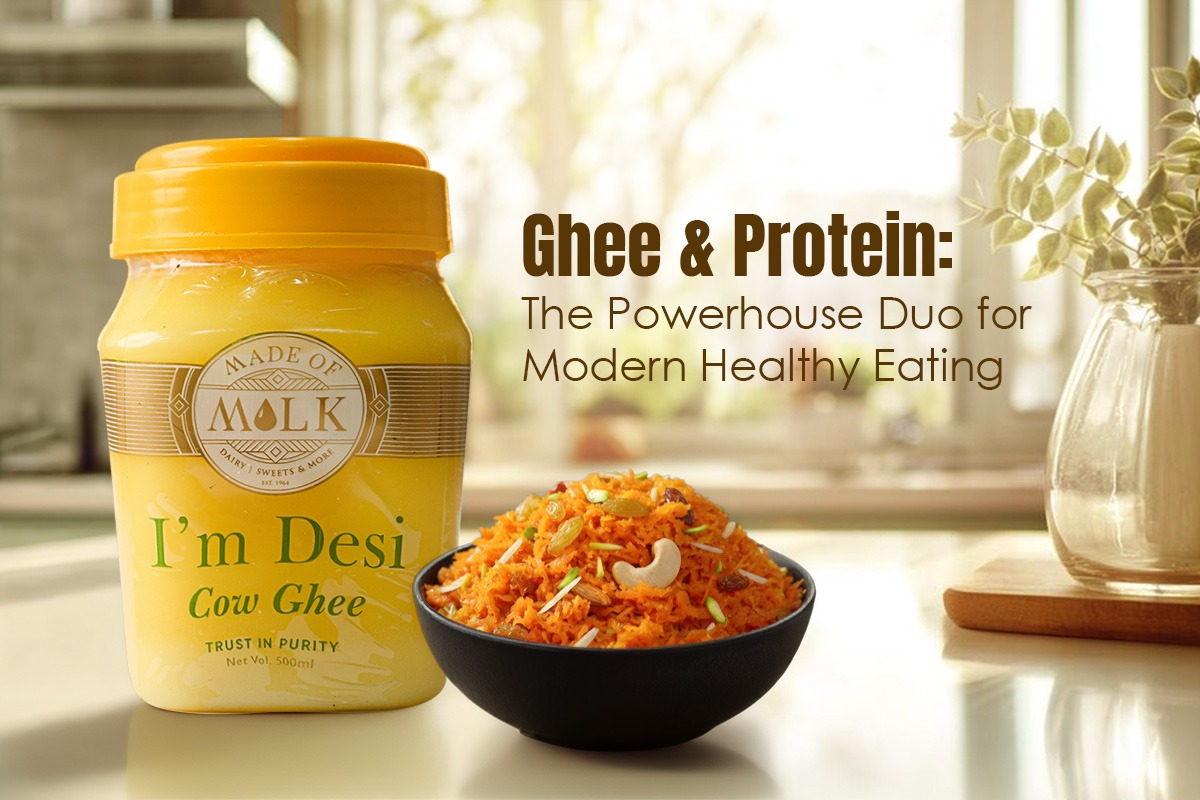
Ghee & Protein: The Powerhouse Duo for Modern Healthy Eating
In the evolving landscape of nutrition, the conversation has shifted from "low-fat" obsessions to a deeper understanding of "quality fuel." At Made of Milk, we have always championed the wisdom of traditional Indian diets, which have long paired high-quality dairy fats with rich protein sources.
Today, science is finally catching up with tradition. The combination of Ghee and Protein isn't just a culinary staple; it is a nutritional powerhouse that supports metabolic health, sustained energy, and physical recovery. This guide explores how these two elements work together to redefine healthy eating for the modern lifestyle.
The Ghee Renaissance: Beyond the "Fat" Myth

For decades, ghee was unfairly maligned due to a lack of understanding regarding saturated fats. However, as we move toward more evidence-based nutrition, ghee is reclaiming its rightful place as a "superfood."
What Makes Made of Milk Ghee Special?

Purity is the heartbeat of our process. Our ghee is crafted using traditional methods, ensuring that the moisture is completely evaporated and the milk solids are toasted to perfection. This results in:
-
High Smoke Point: Unlike butter or many seed oils, ghee doesn't break down into harmful free radicals at high temperatures, making it the safest choice for Indian sautéing and deep-frying.
-
Short-Chain Fatty Acids: Ghee is rich in Butyric acid, which supports gut health and reduces inflammation.
-
Bioavailability: Ghee acts as a carrier for fat-soluble vitamins (A, D, E, and K), ensuring your body actually absorbs the nutrients you consume.
The Role of Protein in the Indian Diet
Protein is the building block of life. From muscle repair to enzyme production, every function in your body relies on it. In an Indian context, where vegetarianism is prevalent, dairy becomes the primary and most complete source of protein.
Why Dairy Protein?
-
Complete Amino Acid Profile: Unlike many plant-based proteins, dairy protein (found in our milk and paneer) contains all nine essential amino acids.
-
High Digestibility: Dairy proteins like casein and whey are highly bioavailable, meaning the body can easily break them down and utilize them.
-
Satiety: Protein is the most satiating macronutrient. Pairing it with a healthy fat like ghee ensures you feel full for longer, preventing the mid-day "sugar crash."
The Synergy: Why Ghee and Protein Belong Together
When you consume protein alongside ghee, you aren't just eating two different nutrients—you are creating a synergistic effect that enhances your health.
1. Enhanced Nutrient Absorption
Many protein-rich vegetables (like spinach or lentils) contain vitamins that are fat-soluble. By adding a spoonful of Made of Milk Ghee to your protein dish, you unlock these nutrients, allowing your body to absorb them more efficiently.
2. Slow-Release Energy
Protein provides steady energy, but fat provides long-burning fuel. Combining the two ensures that your blood sugar levels remain stable. This is particularly beneficial for athletes or busy professionals who need sustained mental and physical energy throughout the day.
3. Gut Health and Metabolism
Ghee’s butyrate content supports the lining of the gut, while protein provides the tools for tissue repair. A healthy gut is the foundation of a high-functioning metabolism.
Incorporating the Duo into Your Daily Routine
Healthy eating shouldn't feel like a chore. At Made of Milk, we believe in making nutrition delicious. Here are three ways to combine these powerhouses:
The Classic Paneer Sauté
Paneer is one of the most concentrated sources of dairy protein. Instead of using refined oils, sauté your paneer cubes in Made of Milk Ghee. The ghee infuses the paneer with a rich, nutty aroma while adding healthy fats to your protein-heavy meal.
The "Golden" Dal
Lentils are a staple protein. Tempering your dal with a tadka of cumin, garlic, and pure ghee doesn't just improve the taste—it lowers the glycemic index of the meal, making it much healthier for diabetic or weight-conscious individuals.
The Modern Ghee-Coffee (Bulletproof Style)
For those following a keto or low-carb lifestyle, adding a teaspoon of pure ghee to your morning beverage can provide the fat-fuel needed to process protein-heavy breakfasts more effectively.
The Made of Milk Quality Standards
At Made of Milk, we don't just sell products; we sell trust. Whether it is our pure milk, our protein-rich paneer, or our artisanal ghee, every item undergoes rigorous quality checks.
-
Sourcing: We work with selected dairy farmers who prioritize animal welfare and clean milking practices.
-
No Fillers: Our ghee is 100% milk fat. No vegetable oil, no palm oil, and no artificial coloring.
-
Freshness: Our paneer is made fresh and delivered quickly to ensure the protein structure remains intact and the texture remains soft.
Frequently Asked Questions
Q1: Is ghee better than butter for weight loss?
Ghee is clarified butter, meaning the water and milk solids (lactose/casein) are removed. It is purely fat, rich in CLA (Conjugated Linoleic Acid) which can actually aid in fat loss when consumed as part of a balanced diet. Because it lacks lactose, it is also better for those with mild dairy sensitivities.
Q2: How much protein is in Made of Milk Paneer?
Our paneer is a high-density protein source. On average, 100g of our fresh paneer provides approximately 18-20g of complete protein, making it an excellent meat substitute.
Q3: Can I use ghee for high-heat cooking?
Absolutely. Ghee has a smoke point of about 250°C (482°F), which is much higher than butter (175°C) or most unrefined oils. This makes it ideal for frying and searing protein like paneer or chicken.
Q4: Is it okay to eat ghee every day?
Yes, in moderation. For a healthy adult, 1-2 teaspoons of pure ghee per day can provide essential fatty acids and aid in the digestion of protein.
Q5: Does ghee contain protein?
Ghee itself is almost 100% fat. However, it is the perfect companion to protein-rich foods because it helps the body process and absorb the nutrients found in those foods.
Q6: What makes "Pure Milk" important for making ghee?
If the starting milk is adulterated, the ghee will lack the characteristic aroma and health benefits. At Made of Milk, we start with the highest quality pure milk to ensure our ghee is rich in natural vitamins and flavor.
Q7: Is paneer a good protein source for children?
Yes! It provides the calcium needed for bone growth and the protein required for muscle development. Sautéing it in a little ghee makes it even more palatable and nutritious for kids.
Conclusion: Balancing Tradition and Science
The journey toward healthy eating doesn't require us to look for the next "fad" diet. Often, the answers are already in our kitchens, passed down through generations. By combining the rich, digestive benefits of ghee with the foundational strength of protein, you are giving your body exactly what it needs to thrive.
At Made of Milk, we are committed to providing the purest versions of these essentials. From our farm-fresh milk to our hand-crafted ghee, we invite you to experience the difference that purity makes.
Redefine your health. Embrace the power of dairy. Explore the full range of Made of Milk products on our website today and take the first step toward a stronger, healthier you.
